How to Communicate Wait Times to Customers Without Losing Their Patience
A customer who has been told to expect twenty minutes is usually fine at minute eighteen. The same customer, told only that "someone will be with you shortly," is often irritated by minute eight. The wait barely changed. The information did.
Queue management gets plenty of attention on the operational side: staffing, layout, throughput. But most complaints are not really about minutes. They are about not knowing. You cannot always shorten a line, but you can almost always control how long it feels, and that work starts with what you tell people and when.
Perceived Waiting Is Mostly Waiting for Information
When people have no estimate, they do something costly: they monitor. They check the door, refresh the page, count the people ahead of them, and rehearse how annoyed they are going to be. That monitoring is what makes a wait feel long. Give them a number and a reason, and the monitoring stops. They can relax, scroll their phone, or decide whether to stay at all.
That leaves you two levers. The first is an accurate expectation at the moment someone joins the queue. The second is visible proof of movement after they have joined it. Most businesses use neither, then wonder why a ten-minute wait produced a two-star review.
Give an Estimate Before Anyone Has to Ask
"About ten to fifteen minutes" beats "not too long" every single time. The estimate should be based on the queue in front of the person and the pace you are actually seeing today, not on the pace you wish you were running. When in doubt, round up rather than down.
If you say twenty minutes and deliver fifteen, nobody complains. If you say ten and deliver twenty, you have broken faith twice: once when you made the promise, and again for every minute after it expired. Padding has limits too. An inflated estimate sends away customers who would gladly have waited, so aim for honest, not cautious. If you genuinely cannot guess, share what you know: "There are six people ahead of you, and each is taking about four minutes." People trust numbers they can check themselves.
Refresh the Number Before It Expires
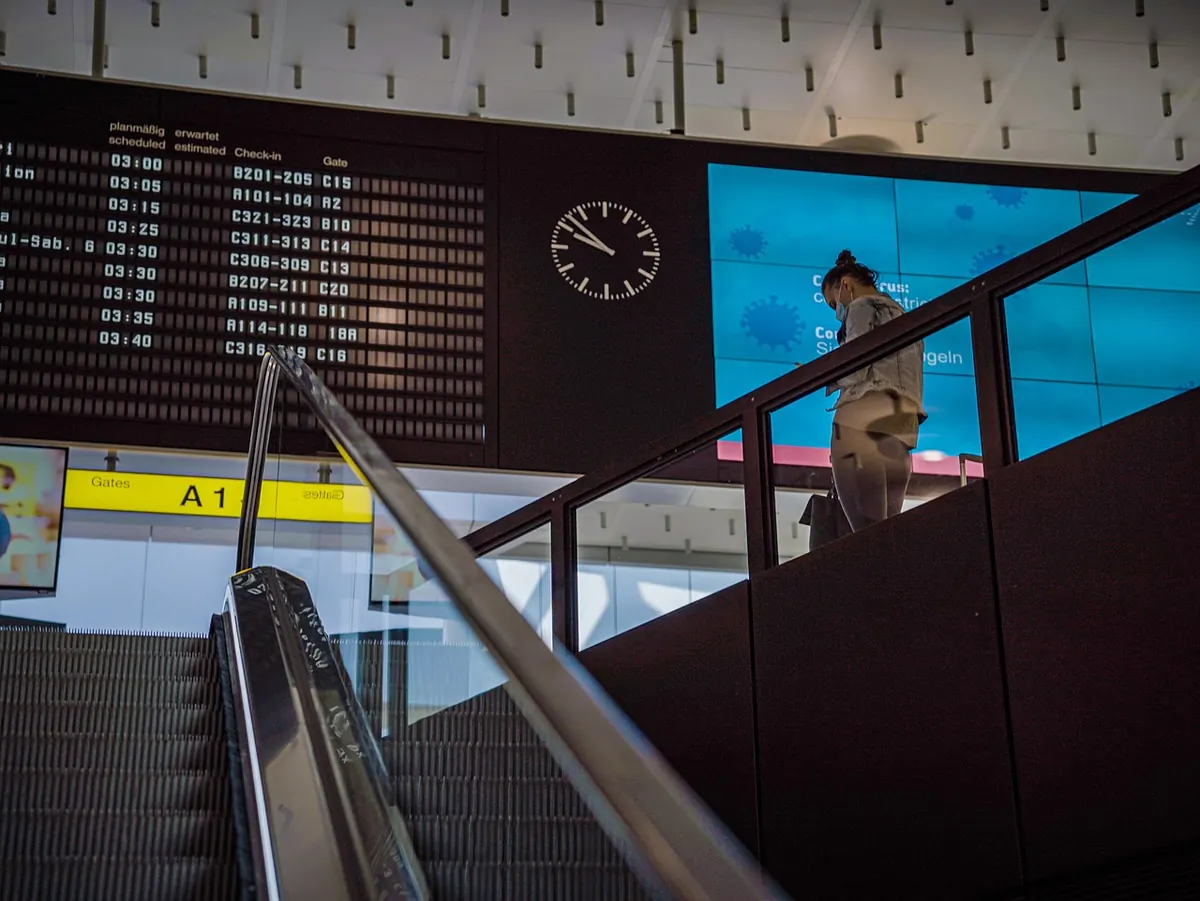
One working rule covers most situations: update the queue at least once before your previous estimate runs out. If you said twenty minutes, refresh around the ten-minute mark. An update can be a screen, a board, a text message, or simply a staff member walking the line. What matters is that it arrives before the old number does.
A good update has a predictable shape:
- The new estimate first. "About ten more minutes" — lead with the number, not the apology.
- A plain reason, if you have one. "Two team members are tied up with a large order" tells people the delay is finite and understood.
- What happens next. "Your number will be called" or "I'll come back at 2:40" gives people something to watch for.
- The time of the update. "As of 2:15" stops anyone from acting on a stale figure.
Name one person who owns the queue's accuracy for each shift. When updates belong to everybody, they belong to nobody.
Signage That Answers the Question People Are Already Asking
Most queue signage is decorative. It apologises, thanks people for their patience, and says nothing. Useful signage does the opposite — it answers the three questions already running through every head in line.
- How long? A specific range, in large type, positioned where people decide whether to join.
- Why? A short reason, only if it is true and specific. "One till open" is more useful than "high demand."
- Can I leave and come back? Holding a place, ordering ahead, or returning later changes the entire calculation.
Place the sign at the decision point, not past it. A wait-time board at the back of the line is trivia; the same board at the entrance is a tool. And keep it current. A sign that said ten minutes at four o'clock and still says ten minutes at six teaches customers that your information is ornamental — after which no updated number will be believed.
Digital Updates, Kept Short and Specific
Text messages, virtual queues, and live displays are the cheapest reassurance you can buy. The rules are simple. Front-load the useful part: "You're number 42. About 25 minutes. We'll text when you're next." That beats a cheery "Thanks for joining our queue!" every time.
Send one message per meaningful change, not a running commentary. Keep wait updates transactional, and never fold a promotion into a delay notice; it reads as tone-deaf. Only message people who opted in, tell them how to stop, and give an alternative for anyone who would rather not share a phone number. Do not force an app download for a ten-minute wait — the friction costs more goodwill than the notification earns.
When the Wait Runs Long, Say So Early
Bad news does not improve with age. Tell people at the moment you know, not when they finally ask. A short, specific message does the job:
Update on your order: the kitchen is running about 15 minutes behind, so your food is now around 2:45. We would rather you know now than guess. We will text again if that changes.
Apologise once, briefly, then spend your words on the new estimate and the new plan. Skip the blame, skip the long explanation. And always leave an exit: the option to come back later, take a refund, or be served first when they return. An exit turns a trapped customer into a customer who chose you.
A Routine You Can Start This Week
Pick one queue — the busiest one. Time it properly for a few days and write down a realistic range. Put that range at the point where people decide to join. Set a refresh interval and stick to it, even when nothing has changed. Name the person responsible for updates on each shift, and give them two or three approved sentences they can send without asking a manager.
Then measure the thing that actually matters: how often customers ask "how much longer?" Every one of those questions is a sign that your estimate arrived too late. Fix the timing, and the queue gets quieter without moving any faster.
Photo: Sasha P / Pexels


You Might Also Like
Copying last week's rota is easy, and expensive. Here's how to forecast queue demand interval by interval, then match shift starts, breaks, and tasks to the curve.
Turn wait-time and arrival data into a clear, one-page business case for extra staff at peak hours, with numbers your manager can check.